
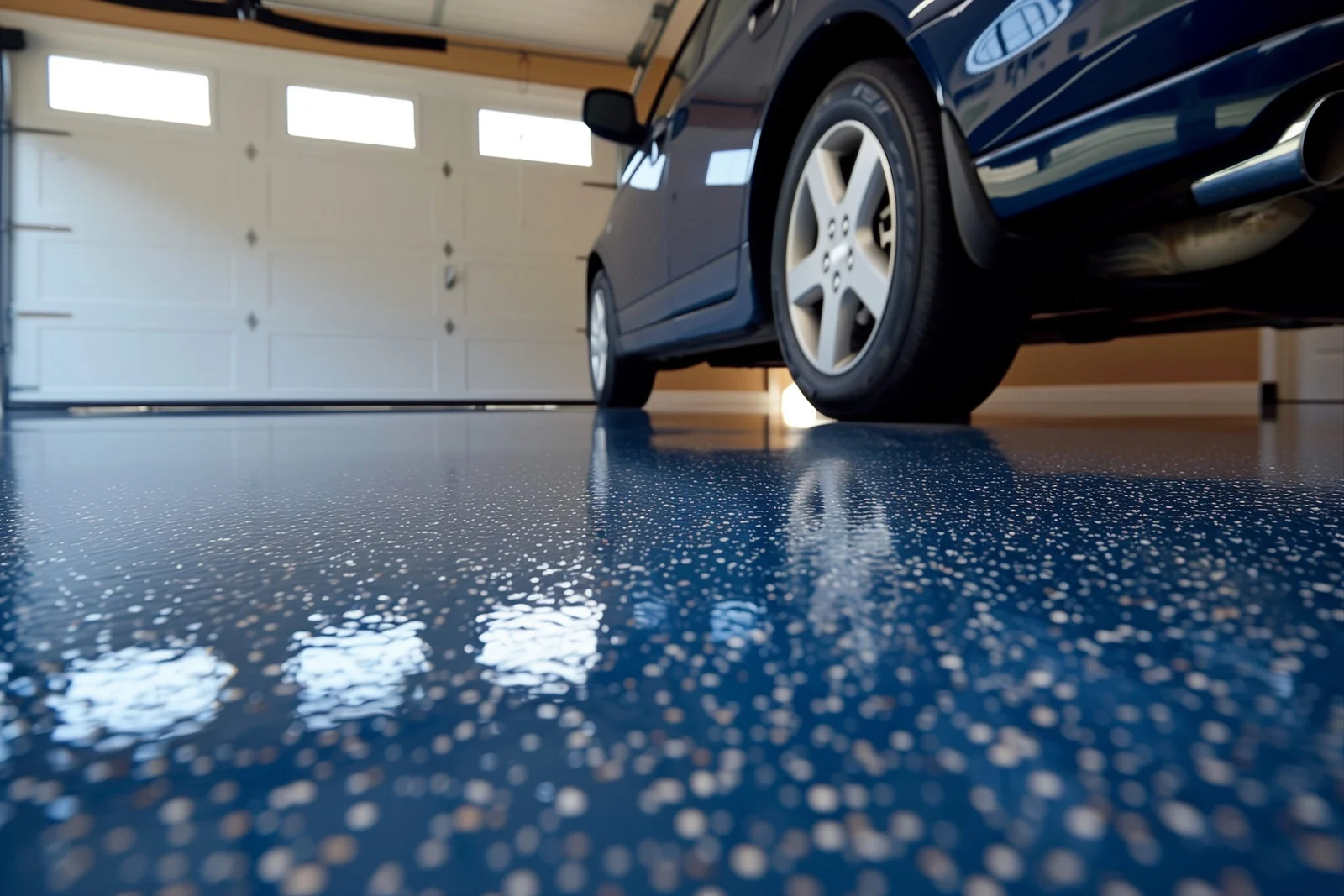
Professional Epoxy Garage Flooring in Clearwater, FL
Upgrade your Clearwater, FL garage with epoxy flooring that improves concrete protection, appearance, traction, cleaning, and everyday floor performance.
Garage floors experience vehicle traffic, dirt, moisture, automotive fluids, tools, storage equipment, and regular foot traffic. Over time, untreated concrete can become stained, dusty, worn, or difficult to keep clean. Earthstone Epoxy Coating LLC provides residential concrete coating services across Florida, including garage floors, patios, driveways, and other suitable surfaces. Epoxy garage flooring creates a finished layer over properly prepared concrete and gives homeowners several options for decorative flakes, textures, and surface appearance. However, a successful coating project depends on more than choosing a color. Concrete condition, cracks, moisture, previous coatings, surface preparation, coating selection, and curing all affect the finished floor. Homeowners in Clearwater, Sun City Center, and surrounding areas should have the slab evaluated before installation so existing problems are not simply covered. This guide explains garage floor preparation, epoxy finishes, concrete repairs, installation, maintenance, and important decisions to make before coating a garage.
Why Homeowners Choose Epoxy Garage Flooring
A garage coating can improve both the appearance and usability of an existing concrete floor.
Creating a Finished Surface
Bare concrete can release dust and absorb spills over time.
Professional epoxy garage flooring creates a finished surface that can be easier to sweep, clean, and maintain than rough untreated concrete.
Homeowners can also select from decorative flake, glossy, textured, and other finish options depending on the desired appearance.
Improving Garage Appearance
Garages are increasingly used for more than vehicle parking.
Some homeowners use them for storage, workshops, hobbies, exercise equipment, or general household projects. A finished floor can make the space look more organized and visually connected to the rest of the home.
Color and decorative options should still be chosen with practical use in mind.
Concrete Preparation Comes First
Surface preparation is one of the most important parts of a garage coating project.
Inspect the Existing Slab
Before coating begins, the installer should evaluate cracks, stains, old coatings, surface damage, moisture concerns, and other conditions that could affect adhesion.
Concrete that looks acceptable from a distance may still have contaminants or weak surface material that requires preparation.
Remove Unsuitable Existing Coatings
Old paint, failing coatings, and loose material should not simply be covered with another layer.
If the existing material is separating from the concrete, the new system may depend on an unstable surface beneath it.
Proper removal creates a better foundation for the new coating.
Prepare the Concrete Surface
Mechanical preparation may be used to create a suitable surface profile for the coating system.
The goal is to remove contaminants and prepare the concrete so the selected material can bond appropriately.
Preparation methods should be based on the slab’s actual condition rather than using the exact same process for every garage.
Address Cracks Before Applying Epoxy
Many garage slabs develop cracks over time.
Evaluate Crack Type and Condition
Small surface cracks may be suitable for repair during preparation.
Larger cracks, active movement, settlement, or significant structural concerns may require additional evaluation before coating proceeds.
A floor coating should not be treated as a structural repair product.
Repair Appropriate Areas First
Where suitable, damaged sections can be prepared and repaired before the coating is installed.
The repair should be allowed to reach the condition required for the flooring system before additional layers are applied.
Understand That Concrete Can Move
Concrete naturally responds to building and ground conditions.
A coating can improve the finished surface, but it cannot prevent every future crack or movement within the underlying slab.
Homeowners should have realistic expectations about what the flooring system can and cannot correct.
Epoxy Garage Flooring in Clearwater, FL
Earthstone’s Clearwater location page supports garage floor coatings along with other epoxy flooring services for residential properties.
Homeowners considering epoxy garage flooring in Clearwater, FL should think about how the garage is used before selecting a coating system.
Garages Used for Vehicle Parking
Vehicle areas need flooring suited to regular tire traffic, dirt, moisture, and occasional automotive spills.
The installer should know how frequently vehicles use the garage and whether the floor has existing oil or chemical staining.
Contaminated concrete may require additional preparation before coating.
Garage Workshops
A workshop may experience tools, equipment, workbenches, rolling storage, and heavier day-to-day use.
Homeowners should discuss expected activity with the installer so surface texture and coating choices reflect how the space will function.
Multipurpose Garages
Some garages combine parking with storage, fitness equipment, hobbies, or recreational space.
A decorative coating can create a more finished environment, but traction and maintenance should remain priorities alongside appearance.
Garage Floor Coatings in Sun City Center, FL
Earthstone’s Sun City Center page also lists garage floor epoxy among its flooring and concrete coating services.
Property owners considering garage floor coatings in Sun City Center, FL should begin by checking the condition of the existing slab and deciding what type of finished surface they want.
Older Garage Floors
Older slabs may have stains, repaired cracks, worn paint, previous sealers, or areas of surface deterioration.
These conditions need to be understood before installation.
A new coating should be placed over properly prepared concrete rather than being used simply to hide an unknown problem.
Newer Garage Floors
A relatively new garage floor can also receive a decorative coating if the slab is suitable for the selected system.
New appearance does not eliminate the need for surface preparation.
The installer should still follow the coating requirements for concrete condition, preparation, and curing.
Choosing a Garage Floor Finish
Appearance matters, but it should be balanced with practical use.
Decorative Flake Systems
Decorative flakes create visual variation across the floor.
They can help produce a more textured appearance and are available in different color combinations.
Flake size and color should coordinate with walls, cabinetry, storage systems, and other garage features.
Solid-Color Finishes
A solid finish can create a simpler and more uniform appearance.
Homeowners should remember that dust, dirt, and tire marks may appear differently depending on the selected color.
A sample viewed inside the garage can be useful before making a final choice.
Surface Texture
Garages can become wet from vehicles, cleaning, or outdoor moisture.
Surface texture should therefore be considered along with decorative appearance.
Discuss traction requirements with the installer, especially in areas where water commonly reaches the floor.
What Happens During Garage Floor Installation
The exact sequence depends on the coating system and slab condition.
Initial Inspection
The installer reviews the floor for cracks, contamination, existing coatings, damaged areas, and other concerns.
This establishes the preparation required before coating begins.
Surface Preparation
The concrete is cleaned and mechanically prepared as needed.
Cracks or minor damaged areas may also receive appropriate treatment during this stage.
A clean, properly prepared floor gives the coating a better surface for application.
Coating Application
The selected base material is applied according to the system being installed.
Decorative flakes or other design components may be added before subsequent layers or protective finishes.
Edges and transitions should receive attention so the floor has a consistent finished appearance.
Curing
The floor needs appropriate curing time before normal use resumes.
Homeowners should follow the installer’s instructions regarding foot traffic, storage items, and vehicles rather than assuming every coating has the same return-to-service time.
Garage Floor Maintenance
Routine care can help preserve the appearance of a coated floor.
Sweep Away Loose Material
Sand, dirt, leaves, and other debris can collect near garage doors and vehicle paths.
Regular sweeping reduces abrasive material that may otherwise remain under tires or equipment.
Clean Spills Promptly
Automotive fluids, household products, and other spills should be removed rather than allowed to remain indefinitely.
Cleaning products should be appropriate for the installed floor system.
Move Heavy Items Carefully
Dragging metal cabinets, workbenches, equipment, or other heavy objects can mark many finished surfaces.
Lift or move heavy items carefully when reorganizing the garage.
Common Mistakes to Avoid
Several decisions can affect the quality of a garage coating project.
Coating Over Dirty Concrete
Oil, dust, old paint, and other contamination can interfere with adhesion.
Cleaning and preparation should happen before decorative materials are applied.
Ignoring Moisture Concerns
A slab may appear dry at the surface while still having conditions that deserve evaluation.
Visible moisture, recurring damp areas, or other concrete concerns should be discussed before installation.
Choosing Only by Appearance
The most attractive sample is not automatically the best finish for every garage.
Vehicle traffic, workshop use, water exposure, cleaning habits, and traction should influence the decision.
Using the Floor Too Soon
Placing vehicles or heavy objects on a coating before the system is ready can affect the finished surface.
Follow the recommended curing and use schedule after installation.
Choosing an Epoxy Flooring Contractor
A useful proposal should explain what happens before the coating is applied.
Ask About Surface Preparation
Find out how existing coatings, stains, cracks, and weak surface material will be handled.
Preparation should be clearly included in the project scope.
Discuss the Coating System
Ask which layers, decorative materials, textures, or finishes are planned for the garage.
Understanding the system makes it easier to compare options based on more than color.
Review Concrete Repairs
If cracks or surface damage are present, ask how those areas will be addressed and whether any conditions require separate evaluation.
The installer should distinguish between preparation for coating and structural concrete repair.
Conclusion
Epoxy garage flooring can turn bare or worn concrete into a more finished surface that is easier to maintain and better suited to regular garage use. The quality of the result depends heavily on what happens before the decorative coating is visible.
For homeowners in Clearwater and Sun City Center, the process should begin with evaluating the concrete for cracks, contamination, previous coatings, moisture concerns, and other surface conditions. Proper preparation creates the foundation for the flooring system.
Decorative flakes, solid finishes, textures, and other options can then be selected around how the garage is actually used. Vehicle parking, workshops, storage, and multipurpose spaces can each create different priorities.
With careful surface preparation, appropriate coating selection, proper curing, and routine cleaning, homeowners can create a garage floor that provides a cleaner and more attractive environment for everyday use.
Frequently Asked Questions
What is epoxy garage flooring?
Epoxy garage flooring is a coating system installed over prepared concrete to create a finished surface with decorative, protective, and maintenance benefits.
Can epoxy be installed over an old garage floor?
Often, yes. Existing concrete should first be evaluated for cracks, contamination, failed coatings, moisture concerns, and surface damage.
Can a garage floor be coated if it has cracks?
Some cracks can be prepared and repaired before coating. Significant movement or structural concerns may require additional evaluation.
Are decorative flakes available for garage floors?
Yes. Earthstone lists decorative flake finishes among its garage flooring options, along with other textures and decorative styles.
How soon can vehicles return to an epoxy garage floor?
Return-to-service time depends on the specific coating system and curing conditions. Homeowners should follow the installer’s instructions before parking vehicles on the floor.
How should epoxy garage flooring be maintained?
Regularly sweep loose debris, clean spills promptly, use suitable cleaning products, and avoid unnecessarily dragging sharp or heavy objects across the finished floor.